What to Wear Now

Your seasonal style cheat sheet

Why Your Office AC Requires a Completely Different Layering Strategy Than the Weather Outside

2026-07-24

Quick Answer: Dress for the eight hours you’ll spend indoors, not the ten-minute walk from the parking lot. Most offices hold 68–72°F while the sidewalk outside sits near 90°F — a swing of 15 to 20 degrees. The fix is one genuinely warm, easy-to-remove layer you carry out the door and only put on once you’re at your desk.

You walked in at 8:40 a.m. already damp from the commute, grateful for the blast of cold air in the lobby.

By 10:15 you’re typing with stiff fingers and a space heater fantasy.

By 2 p.m. you’ve draped your gym towel over your shoulders like a shawl, which is not the look you planned that morning.

Why Your Office AC Requires a Completely Different Layering Strategy Than the Weather Outside

At a glance

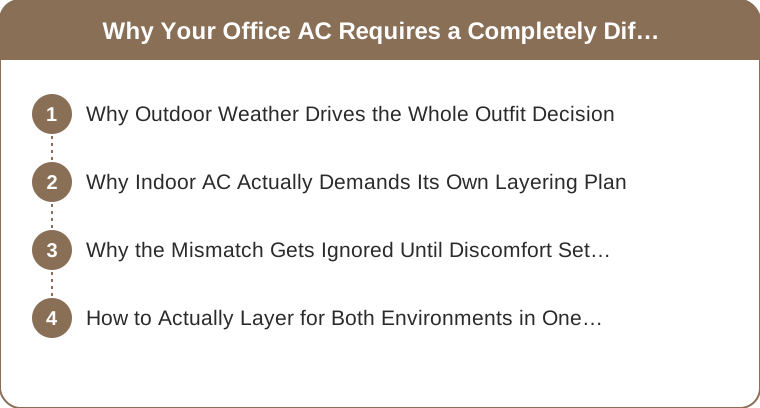
Why does dressing for the outdoor heat feel like the obvious choice?

Because it’s the temperature you can feel while you’re standing at your closet. The morning forecast says 88°F, the window is already bright, and your body votes for the lightest thing you own.

That’s commute-first logic, and it isn’t stupid — it’s just incomplete. You’re optimizing for the twenty minutes you’ll spend outside and ignoring the eight hours you won’t.

The walk to the train, the dash across the lot at lunch, the wait for a rideshare at 6 — those add up to maybe 30 to 45 minutes of your day. Everything else happens under a vent.

How cold do offices actually get?

Cold enough that it’s a documented workplace complaint, not a personal quirk. Most commercial buildings are set somewhere between 68°F and 72°F, and open-plan floors often run cooler than that because the system is sized for a full room of people and equipment that may not be there.

Sit under a diffuser and you can be 5 degrees colder than a coworker fifteen feet away. That’s why two people in the same office genuinely disagree about the thermostat — they’re not in the same microclimate.

Then add the part nobody accounts for: you’re sedentary. Sitting still for 90 minutes drops your perceived warmth noticeably compared to walking around. The room didn’t get colder. You just stopped generating heat.

Why Your Office AC Requires a Completely Different Layering Strategy Than the Weather Outside

Why don’t you notice the mismatch until you’re already cold?

Timing. The outdoor heat is immediate and loud. The indoor chill is delayed and quiet — it arrives 60 to 120 minutes into your workday, long after you’ve made every decision that could have prevented it.

By the time you feel it, the cardigan is at home on the chair.

This is the whole problem in one sentence: you get dressed in one climate and live in another, and the two never overlap long enough for your brain to connect them.

Myth vs Fact: the office-cold edition

Myth: “If I’m cold, I should just wear heavier clothes.” Fact: Heavier head-to-toe clothing makes the commute miserable and doesn’t help much anyway. One removable warm layer beats a uniformly thicker outfit, because only the layer solves both environments.

Myth: “A short-sleeve blouse plus a scarf is enough.” Fact: Scarves warm your neck, not your arms and core — the two places you actually lose heat sitting at a desk. A scarf is a nice accent, not a strategy.

Myth: “Natural fibers are always the answer.” Fact: For this specific problem, thin knit fibers that trap air matter more than the fiber’s origin story. A fine merino cardigan and a good technical knit both work; a stiff cotton poplin blazer mostly just looks like it should be warm.

Myth: “It’s only a few degrees.” Fact: A 20-degree gap is the difference between Miami and San Francisco. You’d pack differently for those two cities. Pack differently for these two rooms.

Myth: “Everyone else seems fine.” Fact: Half of them have a blanket in a drawer. The third mistake on most people’s list is assuming they’re the only one freezing.

How it works

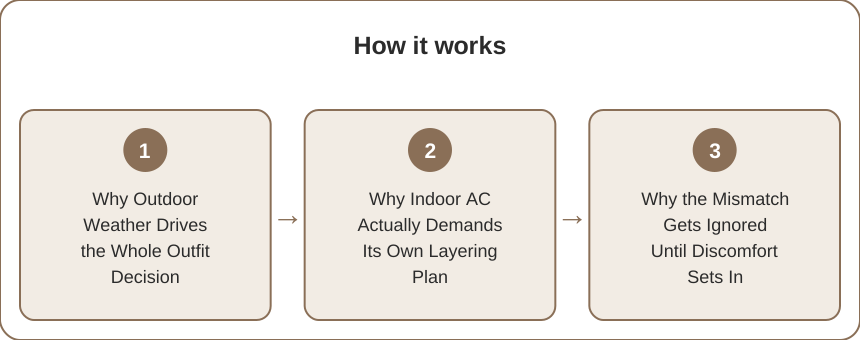
What’s the layering formula that actually works for both?

Think of it as one summer outfit plus one insurance policy.

  1. Base: dress for outside. Lightweight, breathable, short sleeves or sleeveless. Nothing about this changes.
  2. Carry, don’t wear, the warm layer. A fine-gauge cardigan, an unstructured blazer, or a soft zip jacket. It lives in your bag or over your arm until you’re inside.
  3. Pick a layer that packs small. If it doesn’t fold into a tote without wrinkling into a disaster, you’ll stop bringing it by Wednesday. That’s the real test.
  4. Cover the arms and core. Those are the surfaces losing heat while you sit. Sleeves matter more than length.
  5. Keep a backup at your desk. One spare cardigan that never goes home means you’re never fully caught out.

For the commute itself, breathable bottoms do more work than people expect — a pair of buttery-soft high waist yoga pants or a soft knit trouser handles a sticky walk and a chilled office better than stiff woven fabric that traps sweat on the way in and holds cold air once you sit down.

Which fabrics survive a 20-degree swing?

  • Fine merino — warm for its thickness, packs to nothing, doesn’t hold odor if you wear it all week.
  • Soft technical knit — the zip-jacket category; light, quiet, easy to shed.
  • Unstructured cotton or linen-blend blazer — the office-appropriate option, though it’s the least warm of the three.
  • Skip: anything stiff, boxy, or so heavy you’d never carry it in August.

Frequently Asked Questions

How do I keep a cardigan from looking sloppy over a summer dress?

Choose one that ends near your natural waist or hits below the hip — the in-between length is the one that reads rumpled. Keep it in a solid neutral and it functions like a blazer.

Is it worth asking to change the thermostat?

Usually not worth the effort, and often not possible — most commercial systems are centrally managed and balanced for the whole floor. Controlling your own layers is faster and doesn’t require winning an argument.

What about the walk home when it’s still 90 degrees?

That’s the point of a removable layer: it comes off at 5:55 and goes back in the bag. If you find yourself wearing it out the door, it’s too light to have been doing its job indoors.

When to take it more seriously

If you’re persistently cold in a room where others are comfortable, feel it in your hands and feet specifically, or notice it’s new for you, that’s worth mentioning to a doctor — persistent cold intolerance can have causes that a cardigan won’t fix. For most people, though, it really is just the building.

TL;DR:

  • Offices run 68–72°F while summer outside hits 90°F — a 15–20 degree gap you’re dressing for only half of.
  • Sitting still makes it worse; you stop producing heat about an hour in.
  • Build a normal summer outfit, then carry one warm, removable layer — cardigan, unstructured blazer, or soft zip jacket.
  • Cover arms and core, not just your neck. Scarves are decoration here.
  • Pick something that packs small, or you’ll quit bringing it by midweek.
  • Keep one spare layer permanently at your desk as insurance.

Keep Reading

This article is for general styling and informational purposes only. Trends, sizing, availability and pricing may vary by brand and season.

how to dress for a cold office in summerovercooled office ac layering guidelayering for indoor outdoor temperature mismatch

← All articles