Transitional Dressing Made Easy: Between-Season Style
Quick Answer: Transitional dressing works because late-summer days swing 15-20°F between morning and afternoon. Build every outfit from three removable layers, lean on denim and lightweight knits that work across the whole range, and pair one summer piece with one autumn piece — a sundress with boots, a linen shirt with a heavier trouser. Shift the palette gradually rather than switching wardrobes overnight.
It’s 62°F when you leave and 81°F by two in the afternoon. The forecast says one thing; the shaded side of the street says another.
Late August into September is the hardest stretch of the year to dress for, and it’s not a wardrobe problem. It’s a variance problem — and variance is solved with layers, not with new clothes.

Why Are In-Between Seasons So Hard to Dress For?
Because you’re not dressing for a temperature — you’re dressing for a range.
A single day in early September can swing 15 to 20°F from morning to mid-afternoon, and then swing back once the sun drops. No single-layer outfit covers that. The one that’s right at 8am is wrong by lunch, and vice versa.
Indoor climate makes it worse. Buildings are still running summer air conditioning while the outside air has cooled, which means you can be cold inside and warm outside on the same afternoon.
Once you stop trying to find the perfect outfit and start planning for change, the whole problem gets much easier. Adaptability is the actual skill here.
How Do You Build a Layered Transitional Outfit?
Three layers, each one removable, each one fine to be seen in on its own.
- The base. A tee, a fine-knit long sleeve, a tank, or a lightweight blouse. This is what you’ll be wearing at 2pm, so it needs to look complete by itself.
- The middle. A cardigan, an overshirt, a light knit, or a denim jacket. This is the layer you’ll add and remove three times a day.
- The outer, optional. A trench, a light coat, or a scarf for early mornings and after sunset.
The rule that makes this work: every layer has to look intentional when the others come off. A base layer you’d rather not be seen in means you’ll suffer through the heat rather than remove anything.
Practically, that means the middle layer should be easy to carry — a cardigan that packs into a tote beats a structured jacket you’ll end up holding.

Which Pieces Work Across the Whole Range?
Some pieces are genuinely season-agnostic, and they’re what a transitional wardrobe is built on.
- Denim. Jeans and a jacket both work from 55°F to 80°F. Nothing else in a wardrobe has that range.
- Fine-gauge knits. Warm enough for a cool morning, breathable enough for the afternoon. Merino especially.
- Midweight cotton and poplin. Structure without insulation.
- Trousers over shorts. Full-length lightweight trousers handle the swing far better than either shorts or heavy pants.
- Ankle boots. They read autumn but they’re not warm, which is exactly the combination this season needs.
- A high waist legging or yoga pant under a longer top. For casual days and the school run, this handles a 20-degree swing on its own — the waistband stays comfortable whether you’re moving or sitting.
Reach for these first, and the rest of the outfit tends to sort itself out.
What Nobody Tells You About Transitional Dressing
Bridging two seasons in one outfit is the actual trick. A summer dress with ankle boots and a denim jacket. A linen shirt with heavier trousers. A sandal with a knit. This isn’t a compromise — it’s the most stylish version of dressing for this stretch, and it doubles the useful life of everything in your closet.
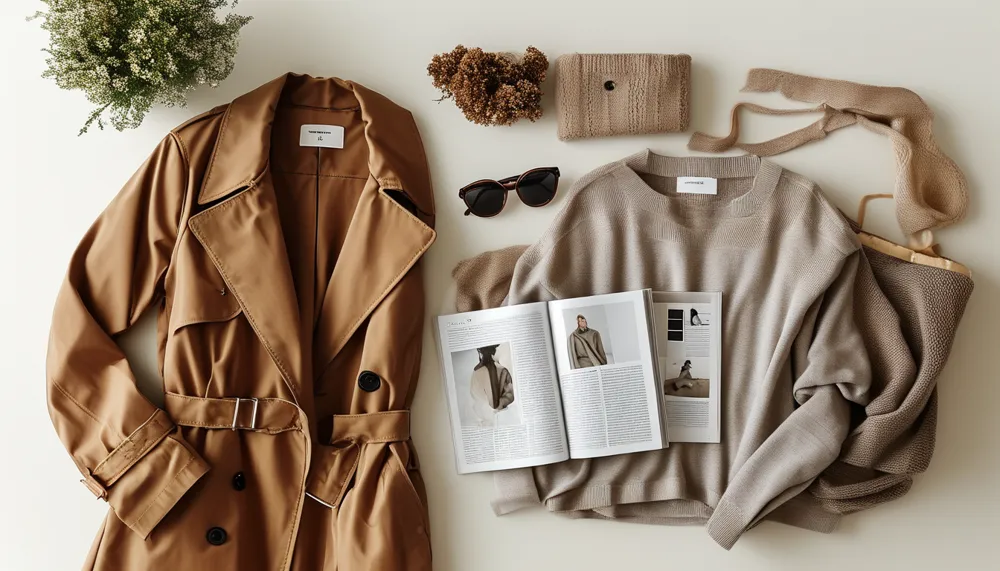
Shift the palette gradually, not overnight. Introduce one autumn tone at a time — rust, olive, camel — against your existing summer neutrals. A hard switch on September 1st looks like a costume change; a gradual drift looks like taste.
Fabric matters more than color for season signaling. A cream linen reads summer; a cream wool reads autumn. You can wear the same shade for six months and change what it says entirely through material.
Check the actual hourly forecast, not the high. The daily high tells you almost nothing about what 8am feels like. Thirty seconds looking at the hourly numbers is the single most useful transitional dressing habit.
And nobody needs a separate transitional wardrobe. This period is genuinely about recombining what you own, not buying pieces for a six-week window.
Mini FAQ
What should you wear when it’s cold in the morning and hot in the afternoon?
Three removable layers, with a base layer that looks complete on its own. Denim, fine knits, and full-length lightweight trousers handle the widest temperature range with the fewest pieces.
Can you wear summer dresses in fall?
Yes, and it’s one of the best transitional moves there is. Add ankle boots, a denim or leather jacket, and tights once it gets colder. It extends the dress’s season by two months or more.
When should you switch to your fall wardrobe?
Gradually, over several weeks, rather than on a date. Let the actual weather lead — introduce heavier fabrics and autumn tones one piece at a time while summer pieces are still in rotation.
TL;DR:
- The problem is daily temperature range (often 15-20°F), not the season itself.
- Build three removable layers, each one presentable on its own.
- Lean on denim, fine knits, midweight cotton, full-length trousers, and ankle boots.
- Pair one summer piece with one autumn piece — that’s the most stylish version.
- Shift the palette and fabric weights gradually; check the hourly forecast, not the daily high.
Layer smartly, recombine what you own, and the trickiest six weeks of the year stop being tricky.
Keep Reading
This article is for general styling and informational purposes only. Trends, sizing, availability and pricing may vary by brand and season.